Autism spectrum disorder is a very topical problem and ranks fourth among the various types of chronic neuropsychiatric pathologies in children.
At the current stage of rehabilitation for children with autism, there are two common methods: medication therapy and psychological and pedagogical correction. Despite a certain positive effect of drug therapy, psychological and pedagogical correction has proven to be the most effective form of work for children with autism.
Research by doctors and psychologists on the problems and peculiarities of the development and learning of children with autism has led them to the understanding that with this developmental disorder, the child’s perception and thinking is organized differently. The world around them seems chaotic and illogical, and people’s actions are incomprehensible and inconsistent. One of the reasons is a poorly developed imagination, which in turn does not allow children to understand abstract concepts such as friendship, responsibility, rules of society and morality.
Consequently, the education of children with autism and all corrective and developmental work is aimed at shaping appropriate behavior, developing creativity, communication skills and adapting to society.
In 1965, the School of Medicine and the University of North Carolina psychologist Eric Schopler developed TEACCH therapy, a remedial and developmental program that teaches a child with autism or other similar disorders and adapts them to life.
TEACCH therapy is based on the process of visualizing the environment and structuring it, because for a child with an environmental learning disability, “knowing” is tantamount to “seeing.” This is the essence of TEACCH therapy.
The TEACCH method of teaching children with autism, which focuses on the implementation of corrective and developmental work from early childhood until the child is fully grown up, and needs the cooperation of the family. The organization of correction begins with diagnosis and structuring of three areas:
- Physical development;
- Аnalysis of the daily routine;
- Organization of the educational process.
This method of teaching children with autism is easy and convenient to use at home by parents and in educational institutions by psychologists or teachers. After diagnosis, a specialist develops a correctional program for the child individually. Diagnostics makes it possible to determine the child’s psychological age, his strengths and weaknesses, and determine the child’s near-developmental zone. This program is first worked through by a specialist with the child, and then the skill is reinforced together with the parents at home. An important condition is the structuring of space and time. That is, zoning the apartment into zones of study, rest, and the like.
Considering the child’s age peculiarities, tasks affect such functional areas of the child:
- sensory perception;
- hand-eye coordination and hand-eye coordination;
- fine motor skills;
- imitation;
- acquisition of speech skills;
- gross motor skills;
- learning about themselves and their environment;
- acquiring self-care skills;
- social interaction with parents and peers.
The development of each area includes a set of tasks and exercises for teaching children with autism. Each exercise is aimed at the development of one area. While learning one skill, the child gains skills in other areas as well. For example, when sorting objects, a child learns the sphere of coordination of movements in parallel.
So, the TEASSN program develops the following skills in a child with an autism spectrum disorder:
- self-care;
- socialization and interaction with others;
- Age-appropriate cognitive functions, taking into account pathological disabilities;
- The child’s orientation within the city limits. For example, a playground, stadium, park, etc.
Visual cues and schedules are used to improve the learning process of children with autism:
- For children ages 4-6, use cards with activities that the child needs to do and a schedule.
- For children 6-9 years old – use pictures with action captions;
- For adults – only text cues.
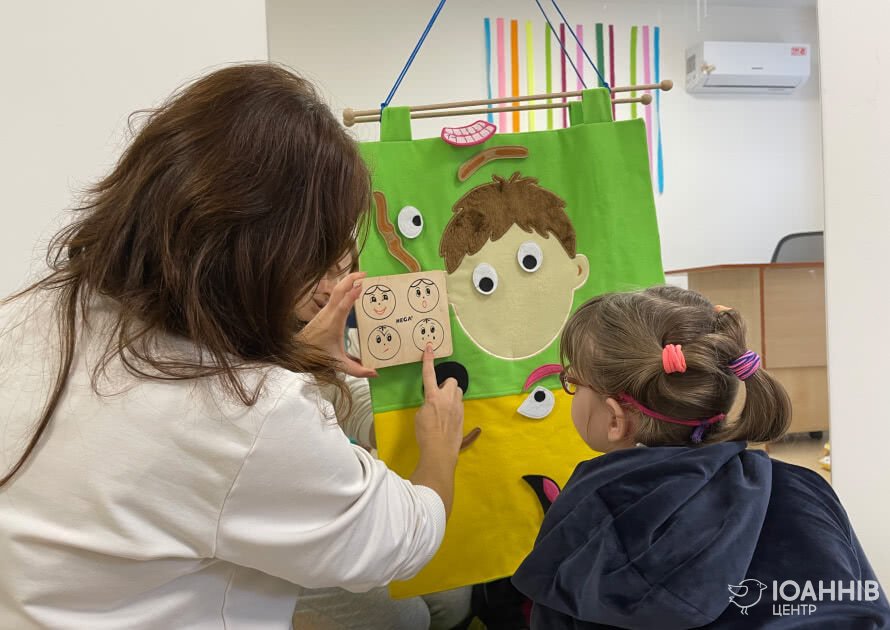
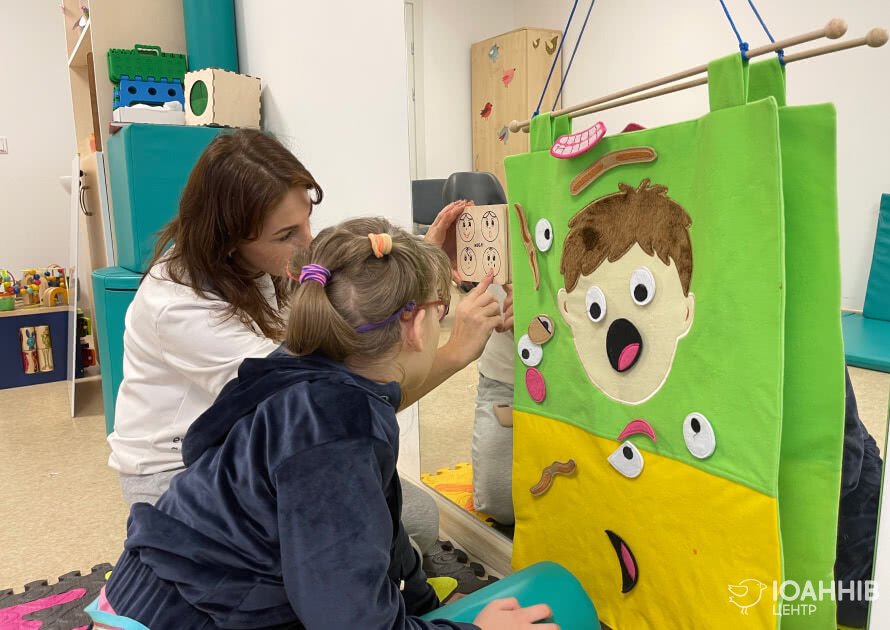
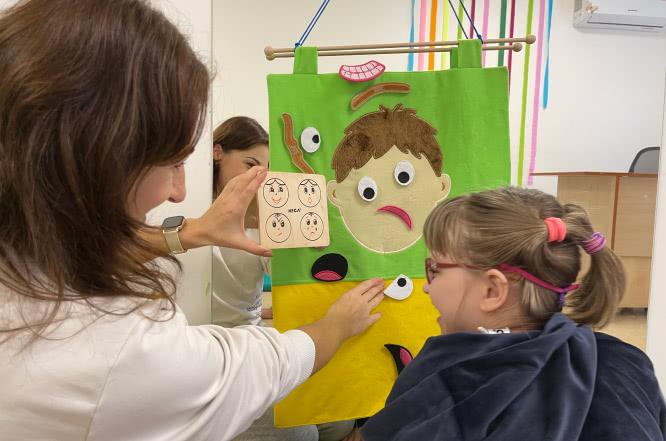
Such images are used both for systematization of time, structuring of space, and for development of communication. For example, the image of a plate and fork designates the place of a meal. A number of images with clothes help the child in the process of dressing. And if the child does not talk yet, he/she uses the image for alternative communication.
Organization of time as a component of the TEACHN program
TeASSN therapy classes help organize the child’s living and learning in the form of a schedule. On this schedule, tasks should be presented in the form of drawings for each day and week as well. Such a schedule allows the child to navigate in time and sequence.
A visual schedule makes it possible to quickly organize a child with autism and other neurological disorders. Each stage of growing up allows us to modify the schedule according to the child’s psychological features and needs. Thus, we prepare the child for independence and develop the ability to plan his or her activities.
Structuring Space as a Component of the TEACCH Program
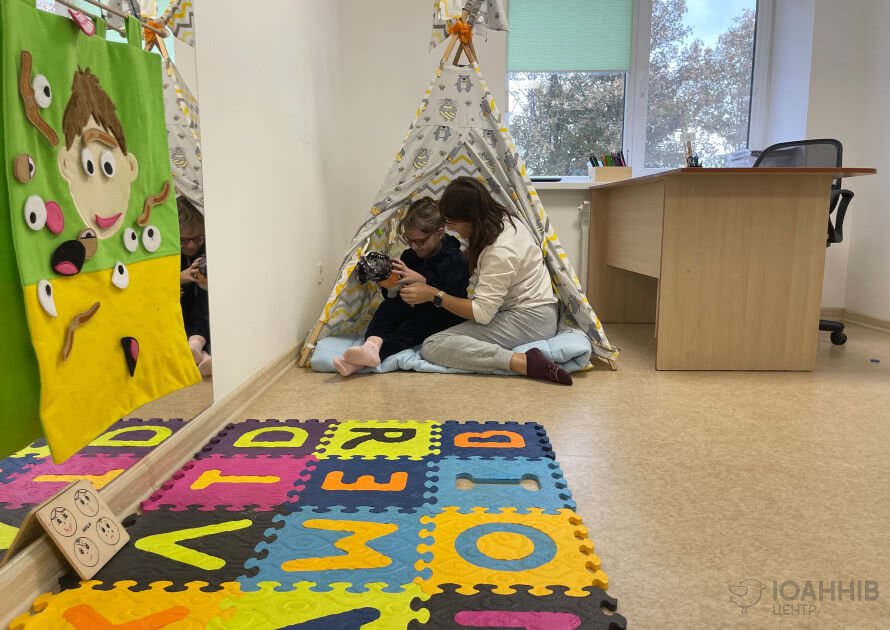
An important step in the formation of spatial ideas is the organization or zoning of space. This can be done both at home and in a school facility. In a school setting, there is a place for learning and a place for play. At home there is a place for eating, playing and learning. It is necessary to delimit these places by certain structures, such as: furniture, carpets, pictures, drawings with inscriptions or special markings. It is very important that structuring the space is not enough, it is also necessary to maintain order and eliminate unnecessary things.
TEACCH therapy accompanies the child with autism or other neurological disorders throughout his or her life and helps him or her to orientate in time and space, overcome anxiety, learn and adapt to the environment.
The article was prepared by a psychologist at the St. John’s Center,
Tatiana Bilokha